One of the toughest things about writing on the New York Hippodrome is trying to explain what the shows were like when there are not many present-day analogues. I usually end up saying some kind of hedging variation, asking people to mentally combine Cirque du Soleil and the Rockettes’ Christmas Special with a Super Bowl halftime show. But when the Olympics are on, I don’t have to struggle. The weird, extravagant, cheesy, over-the-top pageantry in the opening and closing ceremonies? That’s what Hippodrome shows were like. A case in point: last night, when I was riding my exercise bike and watching the Winter 2026 Milano Cortina closing ceremonies, noting the creepy court jester in the pre-taped backstage parts who was going from one dressing room to another and calling on characters from a bunch of different operas, I said to my husband who was on the treadmill, “That’s just like the Hippodrome number called ‘I Dreamed that I Went to the Great Opera Ball!’”
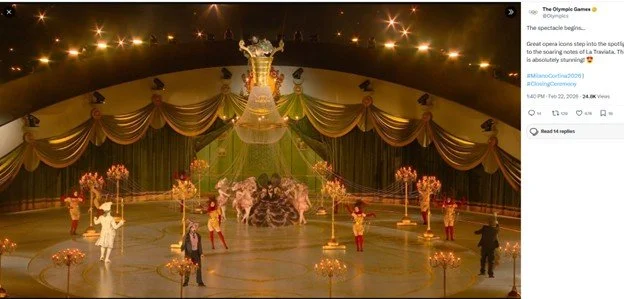
A picture of the stage from the closing ceremony of the 2026 Milano Cortina Winter Olympics as posted on Twitter
This is pure spectacle in the Hippodrome vein: a chandelier with a guy hanging out on it, hanging over a woman dressed as Violetta with a ballet-girl entourage, surrounded by more floor-lamp chandelier equivalents and ladies dressed as chandeliers. Later parts of the spectacle showed Aida in a gold lame gown and headdress, Madama Butterfly in a technicolor kimono, just all of your favorites if you happen to love Italian opera. (A Bluesky friend said she was getting music appreciation flashbacks!)
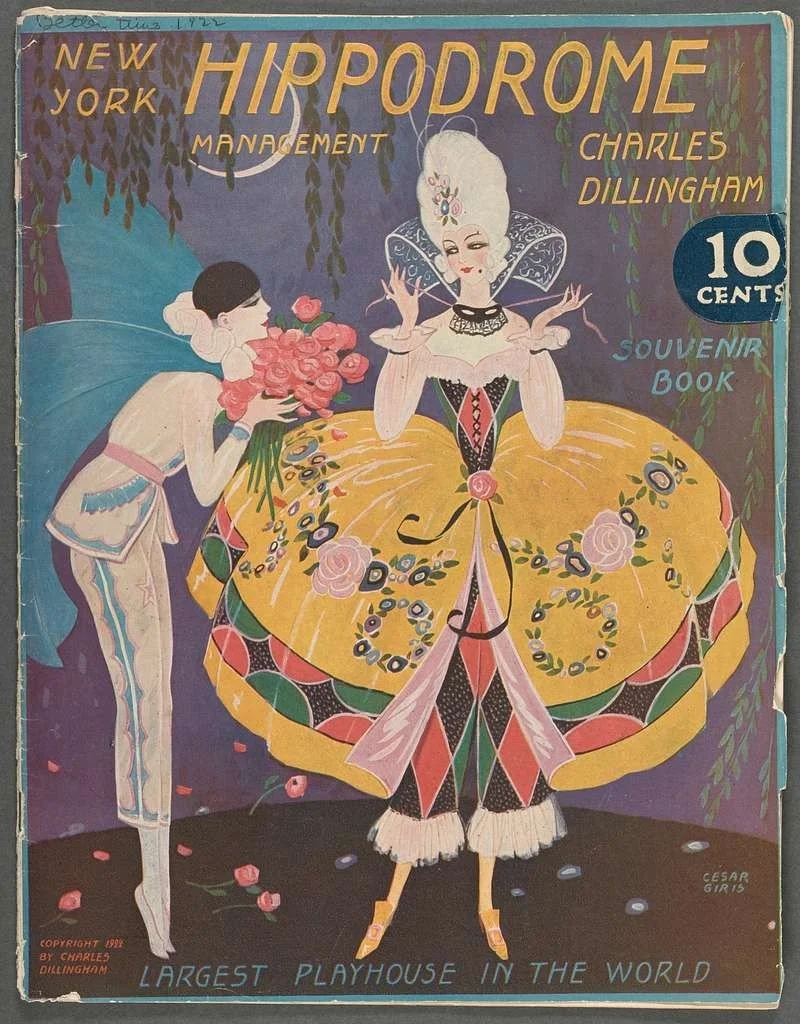
“Better Times Theatrical Production - Box 7 Folder 1,” image, New York Public Library, January 1, 1922, https://picryl.com/media/box-7-folder-1-113647.
The Hippodrome equivalent to this spectacle was in a show called Better Times that ran from Fall 1922-Spring 1923. That’s the souvenir program cover. The number had more than 60 opera characters named in the program, from Carmen and Aida to Tristan and Isolde and the Girl from the Golden West. The number was meant to be a costume party, as seen by the lyrics below:
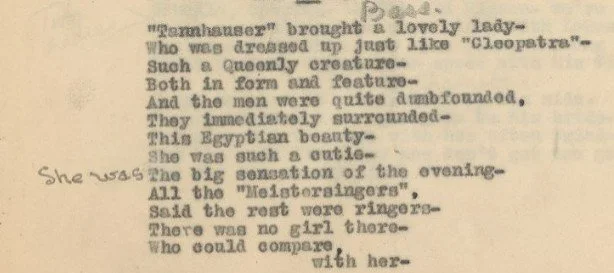
“Better Times: A Super-Musical Spectacle in Three Acts - NYPL Digital Collections,” accessed February 23, 2026, https://digitalcollections.nypl.org/items/85951290-4285-0132-84ec-58d385a7bbd0?canvasIndex=18.
“Tannhauser” brough a lovely lady —
Who was dressed up just like “Cleopatra” —
Such a Queenly creature —
Both in form and feature—
And the men were quite dumbfounded,
They immediately surrounded —
This Egyptian beauty—
She was such a cutie
[She was] The big sensation of the evening —
All the “Meistersingers”
Said the rest were ringers
There was no girl there—
Who could compare,
with her
I love the play between highbrow and lowbrow that you get in the lyrics, especially calling Cleopatra a “cutie” and rhyming “meistersingers” with “ringers.” It’s such a fun period, one when opera is still enough a part of American popular culture that they can riff like that. Highbrow/ Lowbrow: The Emergence of Cultural Hierarchy in America by Lawrence Levine is still so good, and I’m thinking about it again because I’m teaching my Modernism High and Low grad class again in the fall.
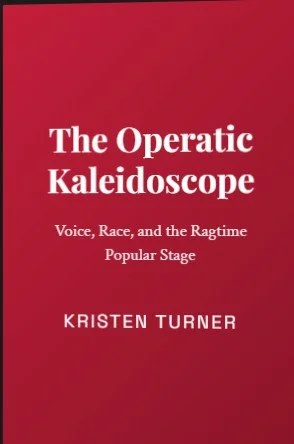
placeholder cover for forthcoming book by Kristen Turner called The Operatic Kaleidoscope: Voice, Race, and the Ragtime Popular Music Stage
One source I hope to add to that class syllabus is The Operatic Kaleidoscope by Kristen Turner, which is coming out this year through the University of Illinois Press. She’s so smart on race and music at the turn of the twentieth century, and she interviewed me for the New Books Network way back when my Gertrude Hoffmann book came out. Musicologists know what’s what. I wish they could have annotated the closing ceremony last night!